

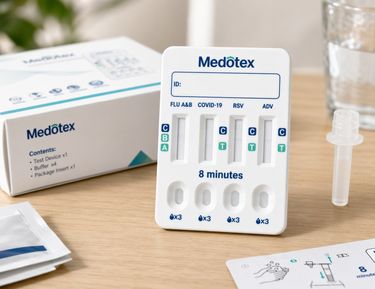
How to Verify CE Certification for Rapid Test Kits: A Buyer’s Checklist
Many buyers assume that a CE certificate guarantees compliance — but in 2025–2026, this assumption has led to costly mistakes.
Across the EU market, importers have faced shipment rejections and regulatory issues due to reliance on IVDD certificates that are no longer valid under IVDR requirements. In several cases, distributors discovered that certificates did not match product categories, Notified Bodies lacked proper IVD authorization, or documentation was inconsistent across official records.
This is why knowing how to verify CE certification for rapid test kits is critical before making any sourcing decision.
In practice, verifying a CE certified rapid test involves a structured set of checks. Buyers should confirm the Notified Body in the EU NANDO database, validate the certificate number in official records, verify the product’s IVDR classification (Class A–D), and cross-check all details against the Declaration of Conformity (DoC) and product labeling. Any inconsistency across these elements should be treated as a potential compliance risk.
Why CE Verification Matters in IVD Procurement
CE verification is a critical step in IVD procurement because regulatory non-compliance can lead to serious consequences. These include shipment rejection at customs, product recalls, financial penalties, and reputational damage.
Under evolving CE IVDR requirements, authorities in the EU have significantly strengthened oversight of in vitro diagnostic devices. Buyers who fail to properly verify CE certification risk sourcing products that are no longer legally marketable.
Understanding how to verify CE IVD status is therefore not only a compliance requirement but also a risk management strategy.
What Does CE Marking Mean for IVD Rapid Tests?
A CE certified rapid test indicates that the product meets EU safety and performance standards. However, the regulatory framework has shifted from IVDD to IVDR, which introduces stricter requirements.
Under IVDD, many rapid tests could be self-declared. Under IVDR, most IVD products are reclassified into risk-based categories, including Class A, B, C, and D.
Class C is particularly important for infectious disease diagnostics. These products typically require Notified Body involvement, making how to verify CE IVD compliance more complex and critical.
Step-by-Step: How to Verify CE Certification for Rapid Test Kits
To properly validate a CE certificate, buyers should not only follow the basic steps, but also understand where to verify, what exact fields to check, and how to handle missing or inconsistent information.
1. Visit the official EU regulatory platforms
Start by accessing official EU regulatory sources:
- The European Commission medical device resources portal
- The EUDAMED (European Database on Medical Devices), if publicly accessible for your product category
Practical tip:
Not all EUDAMED modules are fully open to the public. In many cases, you may only be able to verify partial data or need to rely on manufacturer-provided NB information.
2. Search using multiple identifiers (not just one)
When entering data into the database, do not rely on certificate number only.
Try multiple search inputs:
- Manufacturer legal name (as registered in CE documentation)
- Certificate number (if provided)
- Notified Body number (NB code)
- Product trade name or model number
Why this matters:
Some suppliers use slightly different naming formats across documents, so single-field search may fail even for valid certificates.
3. Verify Notified Body legitimacy and scope
Check the Notified Body carefully:
- Confirm the NB is listed in the official EU NANDO database
- Ensure it is authorized for IVD (In Vitro Diagnostic) products
- Check whether it is approved for the correct risk class (especially Class C or D)
Critical insight:
A valid NB certificate does NOT automatically mean it covers your product category.
4. Match certificate details with product labeling
Cross-check the following items carefully:
- Product name (must match exactly or be clearly traceable)
- Intended use (e.g., infectious disease screening, respiratory pathogens)
- Risk classification (Class A, B, C, or D under IVDR)
- Manufacturer legal entity name
Common issue:
Some suppliers register under parent companies but sell under different brand names, which can create mismatch confusion.
5. Check certificate validity and transition status
Make sure to confirm:
- Expiry date of CE certificate
- Whether the certificate is issued under IVDD or IVDR
- Whether it is in the transitional compliance period
Important note:
Under current EU regulations, many IVDD certificates are still in transition, but may not allow new market placement for certain high-risk devices.
6. Validate consistency across all documents
A legitimate CE-certified rapid test should have consistent data across:
- CE certificate
- Declaration of Conformity (DoC)
- Technical documentation
- Product packaging and IFU (Instructions for Use)
Red flag:
Any mismatch in model numbers, manufacturer names, or classification usually indicates compliance risk.
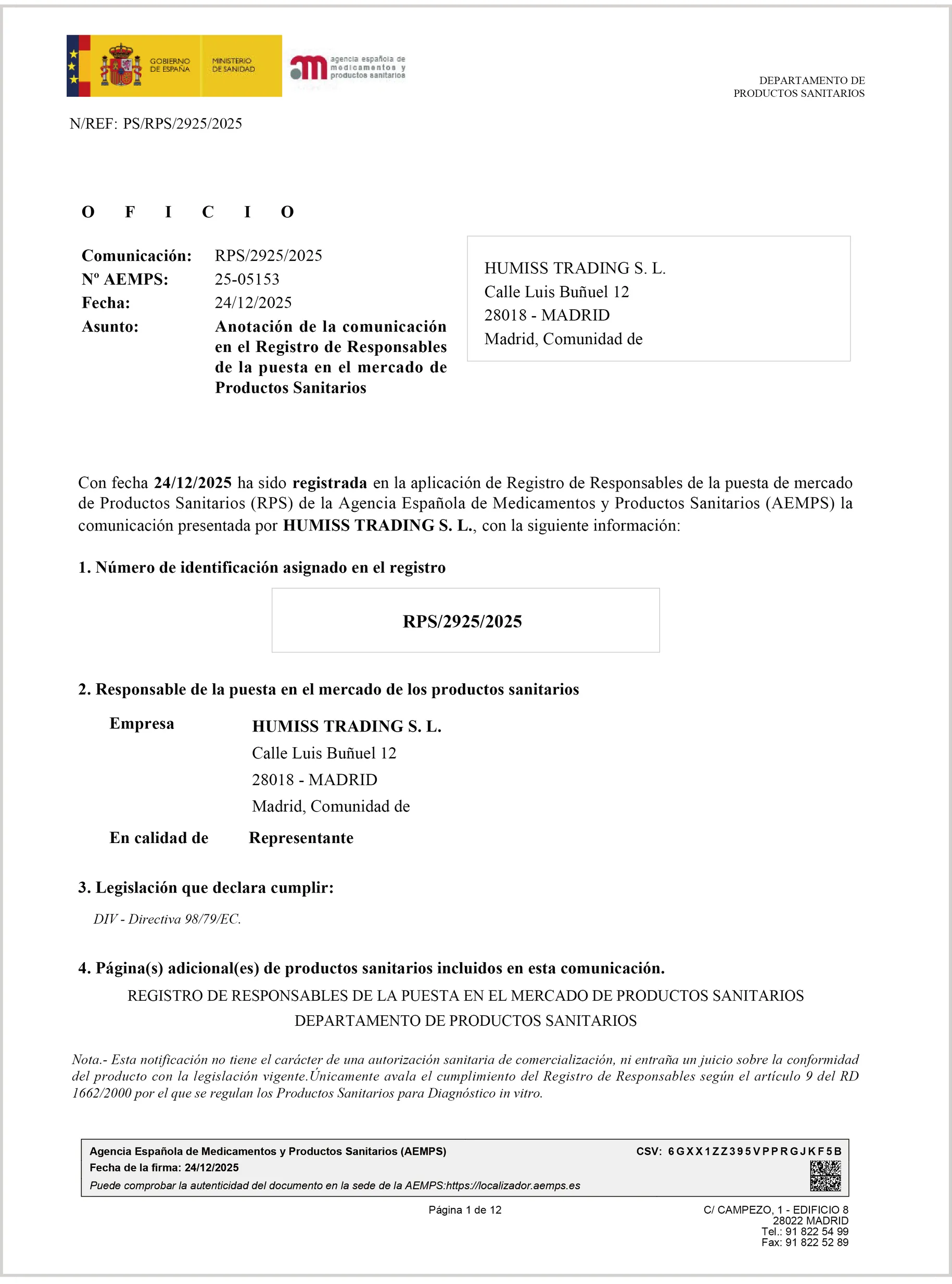
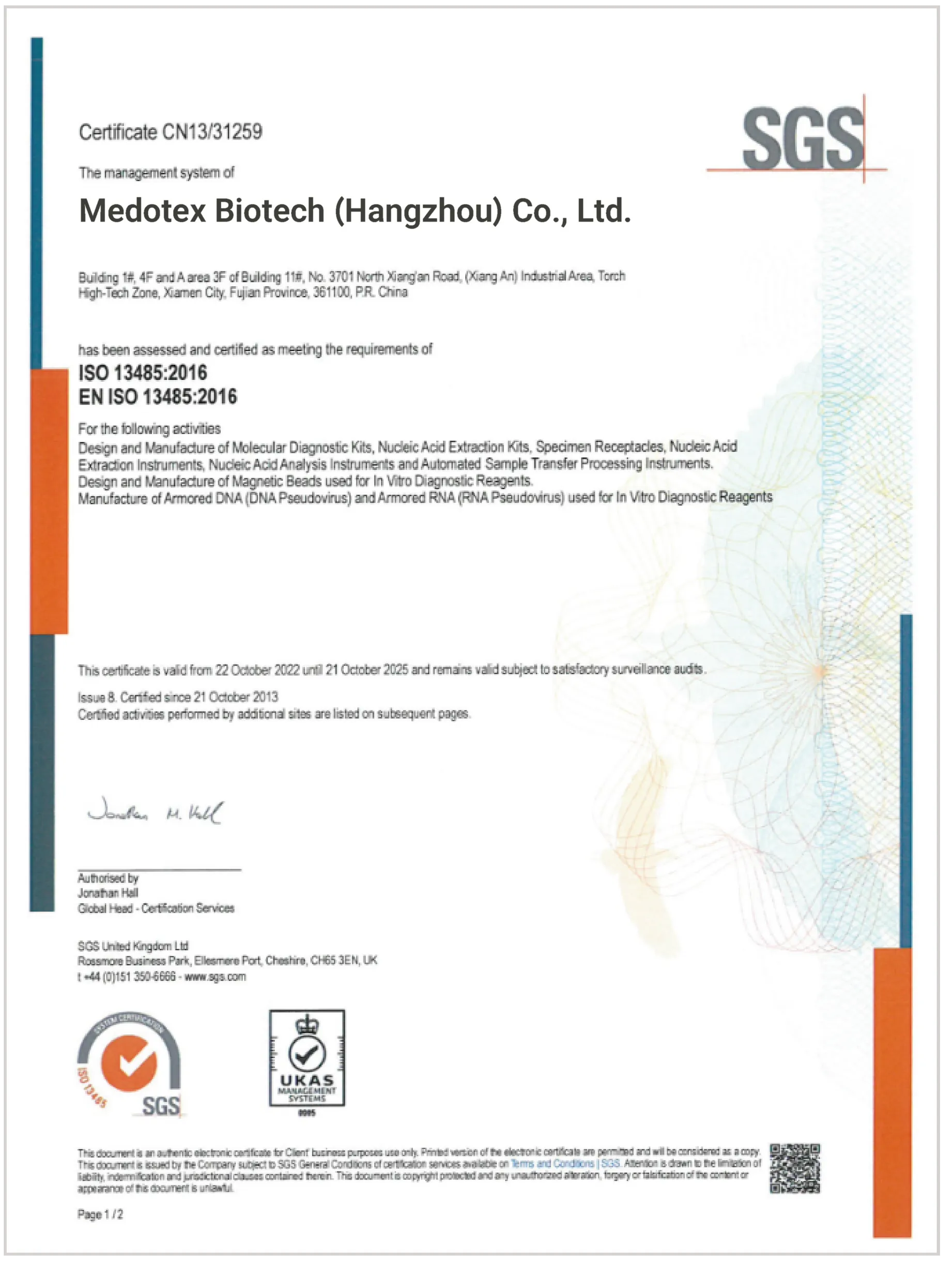
In practice, reliable manufacturers are able to provide transparent certification information for review, either through documentation packages or publicly available certification pages. For example, Medotex provides certification details that can be reviewed and further verified upon request, supporting a more transparent validation process.
7. Final verification check (practical procurement rule)
Before approving a supplier, ensure:
✔ Certificate is traceable in official records
✔ Notified Body is authorized for IVD scope
✔ Product classification matches IVDR requirements
✔ All documents are consistent and aligned
If any step fails:
Treat the product as non-verified CE status until clarified
Quick Check Table:
Verification Step | What to Check | Why It Matters |
CE Certificate | Issued by a recognized Notified Body | Confirms product meets EU regulatory standards |
Certificate Number | Search in official EU databases | Ensures authenticity and validity |
Product Classification | Class A/B/C/D under CE IVDR requirements | Determines if Notified Body involvement is required |
Declaration of Conformity (DoC) | Manufacturer-signed document | Confirms legal responsibility and compliance |
Technical Documentation | Performance and validation data | Verifies clinical reliability and intended use |
IVDD vs IVDR: What Buyers Must Know in 2026
The transition from IVDD to IVDR is one of the most significant regulatory changes in the IVD industry. IVDD compliance is no longer a guarantee of market access in the EU in 2026. And the transition period for many IVD products has either expired or reached a critical threshold.
Many products previously compliant under IVDD may no longer meet CE IVDR requirements. Buyers must recognize that Class D devices (high-risk, such as blood screening tests) must now fully comply with IVDR to be placed on the market. Relying on outdated IVDD declarations in 2026 is no longer a viable procurement strategy; it is a regulatory liability.
Common CE Certification Red Flags
When evaluating a CE certified rapid test, buyers should watch for the following warning signs:
- No Notified Body listed for products that require it
- Self-declared certification for Class C devices
- Certificate numbers that cannot be verified
- Inconsistent or incomplete regulatory documentation
These red flags often indicate non-compliance with CE IVDR requirements and may expose buyers to regulatory and commercial risks.
Equally important, a reliable supplier should be able to provide complete and verifiable documentation upon request. If a manufacturer is unable or unwilling to share consistent CE certificates, Declaration of Conformity (DoC), and supporting technical files, this should be treated as a significant compliance concern.
Identifying these risks early is a key part of how to verify CE IVD processes.
How to Evaluate a Reliable IVD Manufacturer
Beyond verifying CE certification, selecting a reliable IVD manufacturer is critical for long-term procurement success—especially under evolving IVDR requirements.
In practice, trustworthy suppliers typically demonstrate:
- An established ISO 13485 quality management system
- Transparent and verifiable CE documentation
- Clear transition strategy from IVDD to IVDR
- Consistent product labeling, DoC, and technical files
- Proven capability in complex testing formats such as multiplex diagnostics
Manufacturers that meet these criteria are significantly less likely to present compliance risks during EU market entry.
For example, Medotex operates under an ISO 13485-compliant quality system, provides CE-marked products aligned with IVDD, and is actively progressing toward IVDR compliance. The company also specializes in multiplex rapid testing solutions for respiratory and infectious diseases, supporting more reliable and scalable diagnostic deployment.
Conclusion
Verifying CE certification is a critical step in ensuring compliance, product quality, and supply chain reliability. By applying structured verification checks and recognizing common red flags, buyers can significantly reduce regulatory and commercial risks.
In practice, compliance depends not only on certification itself, but also on the transparency and consistency of supporting documentation. Manufacturers that can provide complete, verifiable CE documentation and demonstrate clear alignment with IVDR requirements are typically more dependable partners.
For example, suppliers with established quality systems and transparent regulatory documentation—such as Medotex—can better support compliant sourcing and scalable diagnostic deployment.

Contact
Satisfaction quality, Just-in-time service, and Key-cost offering
©2026 shopastro All Rights Reserved.