

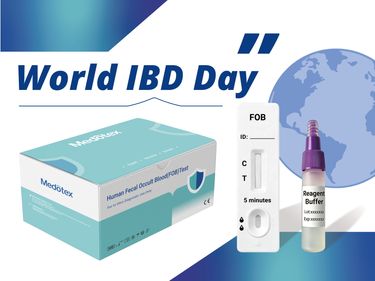
World IBD Day 2026: Rapid GI Testing for Earlier Differential Diagnosis
Every year on May 19, World IBD Day raises global awareness of inflammatory bowel disease (IBD), including Crohn’s disease and ulcerative colitis. The 2026 official theme, “IBD Has No Borders: Access to IBD Care,” emphasizes that timely diagnosis and equitable care should not depend on where a patient lives.
In practice, access to IBD care begins much earlier — with the first presentation of gastrointestinal symptoms such as persistent diarrhea, abdominal pain, fatigue, nausea, vomiting, or changes in bowel habits. These symptoms are often non-specific and may overlap with infectious gastroenteritis, irritable bowel syndrome (IBS), food intolerance, and other gastrointestinal conditions.
This overlap, combined with limited access to endoscopy in primary care, community clinics, and resource-limited settings, makes early gastrointestinal differential diagnosis essential before further IBD-focused evaluation. Clinicians often need to assess whether symptoms are more likely related to infection, inflammation, or a functional disorder before moving toward further IBD evaluation.
Rapid gastrointestinal testing offers practical support at this early stage. While rapid tests do not diagnose IBD on their own, they can help screen for common infectious GI conditions, support faster triage, and guide patients toward the appropriate diagnostic pathway.

How Stool-Based Screening Supports GI Differential Diagnosis
Stool-based screening is valuable in gastrointestinal care because many digestive conditions may produce measurable changes in stool samples. Depending on the clinical need, stool tests may help detect occult blood, inflammatory markers, infectious markers, or other gastrointestinal indicators that inform initial clinical evaluation.
One widely used example is fecal calprotectin, a stool-based marker associated with intestinal inflammation. Clinical guidance from organizations such as NICE and ECCO-ESGAR recognizes its value in supporting the differentiation between inflammatory bowel disease and non-inflammatory gastrointestinal conditions when used in the right clinical context.
In addition to inflammatory marker assessment, stool-based tools such as fecal occult blood tests can provide practical support during first-line gastrointestinal evaluation. Fecal occult blood tests help identify hidden blood in stool, which may provide useful information when clinicians assess possible warning signs or determine whether further GI evaluation is needed.
Together, these tools provide useful first-line information before patients move toward further gastrointestinal evaluation.
How Rapid Testing Expands Access to GI Assessment Workflow
In gastrointestinal care, an effective diagnostic pathway depends on timely symptom assessment, practical screening tools, and clear referral decisions.
Rapid diagnostic testing can support this goal by providing faster results and broader testing availability. Point-of-care or near-patient GI rapid tests can be used in clinical and community healthcare settings where centralized testing may be delayed or limited.
For patients presenting with suspected infectious gastroenteritis, tests such as the Rotavirus & Adenovirus Combo Test can support early screening for common viral GI infections. This helps clinicians determine whether symptoms may be infection-related before moving toward further gastrointestinal or IBD-focused evaluation.
Rapid testing works best when used as part of a structured gastrointestinal assessment workflow:
| Step | Assessment | How It Supports Diagnosis |
|---|---|---|
| Medical history and physical examination | Symptom duration, severity, travel history, medication use, family history | Identifies risk factors, red flags, and possible infectious exposure |
| Basic laboratory testing | CBC, CRP, and inflammatory markers where available | Supports evaluation of systemic inflammation |
| Stool-based screening | Fecal calprotectin, fecal occult blood, or infection-related markers where appropriate | Helps assess whether symptoms may be related to inflammation, bleeding, infection, or other GI conditions |
| GI rapid testing | Screening for common infectious causes, such as viral or bacterial gastroenteritis | Supports faster triage and infection-related decision-making |
| Specialist referral or endoscopy | Further evaluation when IBD is suspected | Supports definitive diagnosis and long-term disease management |
Note: Rapid tests are not a replacement for endoscopy or specialist diagnosis. Their value lies in supporting accessible first-line screening and timely triage in high-volume or resource-limited healthcare settings.
What to Consider When Selecting GI Rapid Test Solutions
When choosing gastrointestinal rapid test solutions, B2B healthcare buyers should look beyond speed. Reliable testing also depends on whether the product fits the intended clinical use, sample type, workflow, regulatory requirements, and supply needs.
Key factors to consider include:
- Clinical performance and reliability — consistent sensitivity and specificity across intended use conditions
- Ease of use — simple sample handling, clear result interpretation, and suitability for point-of-care or near-patient settings
- Regulatory readiness — necessary certifications, documentation, and quality management support for your target market
- Practical usability — stable storage requirements, shelf life, and compatibility with existing clinical workflows
- Supply reliability — consistent availability and scalable support from the manufacturer
High-quality GI rapid test kits should deliver actionable results while being practical enough for daily use in hospitals, clinics, laboratories, and community healthcare environments.
Medotex GI Rapid Test Solutions
As an IVDR & MDSAP-certified IVD rapid test manufacturer, Medotex provides GI infection rapid test solutions designed for practical clinical use and scalable distribution. From sample handling and result interpretation to regulatory documentation and stable supply support, Medotex helps hospitals, clinics, laboratories, and healthcare distributors improve early gastrointestinal screening capacity.
Conclusion: Access to IBD Care Begins With Earlier Diagnostic Support
World IBD Day 2026 reminds the global healthcare community that access to IBD care should not depend on geography, infrastructure, or delayed diagnostic pathways. For many patients, better access begins with earlier gastrointestinal assessment and a clearer route toward appropriate care.
Rapid GI testing can support this process by helping clinicians screen for possible infectious causes and build a more efficient first-line assessment workflow.
Looking for reliable gastrointestinal rapid test solutions?
Contact Medotex to discuss GI infection rapid test options, regulatory documentation, sample requirements, and scalable supply support for your clinical or distribution needs.
Source:
· NICE: Faecal calprotectin diagnostic tests for inflammatory diseases of the bowel

Contact
Satisfaction quality, Just-in-time service, and Key-cost offering
©2026 shopastro All Rights Reserved.